 +233 59 797 6040
 Vivian Sarfo

A retailer needs enough products to serve customers. A wholesaler needs to know what is available for collection or delivery. A manufacturer needs raw materials to keep production moving.
The challenge is not simply having stock. It is knowing what you have, what is selling, what is running low, and when to replenish it, without tying up too much money in products that sit on shelves.
Good inventory management combines reliable records, clear procedures, trained employees, and tools that suit the business. This guide explains nine practical steps for growing SMEs, using Ghanaian examples and research. The principles can also help businesses in other African markets, although operating conditions differ.
What Is Inventory?
Inventory consists of goods and materials a business holds for sale or for use in production and operations.
A supermarket’s inventory may include rice, drinks, and toiletries. A pharmacy holds medicines and health products. A manufacturer may hold raw materials, work in progress, and finished goods.
These items represent money and resources committed to the business. Too little stock can interrupt sales or production; too much can restrict cash available for other needs.
What Is Inventory Management?
Inventory management is the process of recording, monitoring, and controlling stock. It should help you answer:
What do we have, and where is it?
Which items are available, reserved, or awaiting delivery?
What is selling quickly, and what is moving slowly?
When should we reorder?
Do physical quantities match our records?
Clear answers support purchasing, sales, production, and day-to-day decisions.
Why Inventory Management Matters for SMEs
Inaccurate records, stockouts, overstocking, and damaged or expired goods can affect customer service and cash flow. Disconnected notebooks and spreadsheets can also make it difficult to establish which information is current.
Ghanaian research supports the relevance of this topic. A 2024 study by Solomon Boateng, using responses from 110 SME staff in Accra, reported a significant positive relationship between inventory management practices and organizational performance. A 2023 KNUST thesis by Iddisah Abdulai Ewuntomah examined inventory practices, competitiveness, and performance among SMEs in Tamale. These findings concern the businesses studied; they do not establish outcomes for every SME or prove that inventory practices alone cause better performance.
Digitalization initiatives also highlight the need for connected records. In July 2026, the Ghana Enterprises Agency sought a provider for an integrated business platform for selected SMEs under Digitalize for Jobs. The initiative focused on businesses owned or led by persons with disabilities and identified reliance on manual records and fragmented tools. It is a Ghanaian programme example, rather than an Africa-wide survey.
The practical starting point is to improve how your own business receives, stores, records, and issues stock.
1. Keep Accurate Stock Records and Consistent Units
Record every physical stock movement: receipts, sales issues, customer and supplier returns, production consumption, finished output, transfers, and approved adjustments.
Use clear item names or codes so similar products are not confused. Record the location and unit of measure for each item.
Units deserve particular attention when buying and selling in different quantities. If one carton contains 24 bottles, receiving five cartons adds 120 bottles. Selling six individual bottles should leave 114, assuming there are no other movements or reservations affecting the balance.
Whether you use paper, spreadsheets, or software, keep the conversion consistent. Avoid recording five cartons as five bottles.
2. Count Physical Stock Regularly
Count the products you actually hold and compare the result with your records. You can count selected items in manageable groups between full stocktakes.
If the records show 100 units but the physical count is 94, investigate the difference before making an adjustment. Possible explanations include an unrecorded issue, a receiving mistake, damage, or counting errors.
Give greater attention to items that are valuable, move frequently, or regularly show discrepancies. During counts, control or record stock movements so they do not distort the comparison.
The aim is to identify and correct the cause of differences, as well as the recorded balance.
3. Set Reorder Levels That Reflect Delivery Times
Do not wait until an important product reaches zero before ordering more.
A useful starting point is:
Reorder point = what you expect to sell while waiting for your supplier to deliver + extra stock for unexpected demand or delays.
For example, suppose a shop sells about five units a day and the supplier usually takes four days to deliver. Expected demand during that period is 20 units. With a buffer of 10 units, the illustrative reorder point would be 30 units.
The appropriate buffer depends on demand variation, delivery reliability, storage limits, and cash availability. Review the level when those conditions change. The reorder point tells you when to act; it does not automatically determine how much to order.
When reviewing replenishment, also check outstanding purchase orders and stock already committed to customers so you avoid duplicate or insufficient orders.
4. Identify Fast-Moving, Slow-Moving, and Inactive Stock
Not every product needs the same purchasing attention.
Review sales and stock movements to identify items that sell frequently, items that sell occasionally, and products that have not moved for a meaningful period.
Fast-moving products may need regular replenishment. Slow-moving items may need smaller purchases, a pricing review, or a decision about whether to continue stocking them.
Consider value as well as quantity. A few expensive products can tie up more money than many inexpensive items. Seasonal stock also needs context: low sales outside its normal season do not necessarily mean it should be discontinued.
5. Use FIFO or FEFO as Appropriate
Stock rotation helps prevent usable goods from being overlooked in storage.
FIFO—First In, First Out: means issuing older received stock before newer stock where appropriate.
FEFO—First Expiry, First Out: means prioritizing the batch with the earliest expiry date. This is particularly relevant for medicines and other expiry-dated products. A newer delivery may expire before stock you received earlier, so receipt date alone is not enough. WHO guidance distinguishes FEFO for expiry-dated items from FIFO for items without expiry dates.
Record batch details and expiry dates where relevant, keep labels visible, and separate damaged or expired goods from usable stock. Follow the product’s storage requirements.
Here, FIFO and FEFO describe physical stock rotation. Inventory costing and valuation are separate accounting considerations.
6. Forecast Demand Using Information You Already Have
Forecasting means estimating future requirements using available evidence.
Start with previous sales, seasonal patterns, confirmed orders, and known business changes. For manufacturing, consider the materials needed for planned production as well as customer demand for finished goods.
For example, a drinks retailer can review previous festive-season sales when preparing for Christmas demand. Adjust the estimate for current conditions rather than repeating last year’s purchases automatically.
Compare expected demand with actual sales and refine the next estimate. Forecasting will not remove uncertainty, but it can make purchasing less dependent on guesswork.
7. Train Employees and Assign Clear Responsibilities
Employees should know how to receive goods, record issues and returns, transfer stock, report damage, and request adjustments.
Define who can approve stock changes and what supporting information is needed. Where practical, have someone review significant discrepancies or adjustments.
For a branch transfer, record dispatch from the sending location and receipt at the destination. Goods travelling between locations should not appear available for sale in both places at once.
Clear responsibilities help prevent missing records and make it easier to investigate mistakes. Include new employees in training and explain process changes before introducing them.
8. Connect Inventory With Sales, Purchasing, and Production
Inventory records should reflect the operational stage of a transaction.
A purchase order records an intention to buy. Stock on hand increases when goods are received and the receipt is recorded.
A sales order records customer demand. It may reserve stock, while physical stock reduces when goods are issued or handed over, according to the workflow.
A production process records materials consumed and finished goods received into stock.
A return should record what came back and whether it is suitable for resale, repair, or disposal.
For example, reserving five units for a customer can reduce the quantity available to other customers without changing the physical quantity still in the warehouse.
Connecting these records reduces duplicate entry and helps staff distinguish stock on hand from stock available to promise.
9. Use Digital Tools When Manual Processes Become Difficult
A notebook or spreadsheet may be sufficient for a small operation with limited stock movements. Review that approach when errors, multiple locations, several users, or delayed reporting make it difficult to maintain reliable information.
A suitable digital system can bring item records, receipts, sales, transfers, low-stock information, and reports together. Look for support for your actual units, locations, permissions, and workflows.
Before adopting a tool:
Clean up item names, duplicate records, and opening quantities.
Agree on the procedures staff will follow.
Test representative purchases, sales, returns, and transfers.
Check connectivity needs, data export, training, and support.
Confirm which features are included in the proposed plan.
Choose a system your team can use consistently. Software is most useful when the information entered into it is accurate and timely.
How InceptionForce Supports Inventory Management
InceptionForce brings inventory, sales, purchasing, POS, accounting, production, and reporting into a connected business management platform. Available features depend on the selected package.
For businesses moving beyond disconnected records, the practical value is visibility: understanding what stock is available, which transactions affect it, and what is happening across the business.
Evaluate the platform using your own products, units, warehouses, and daily transactions. This helps establish whether the selected package fits your requirements.
Explore InceptionForce or request a demonstration using your business workflow.
Start With a Simple Inventory Check
You do not need to introduce every improvement at once. Begin with these questions:
Do our physical quantities match our records?
Are receipts, issues, returns, and transfers recorded promptly?
Are units and pack conversions consistent?
Do we know which items are moving slowly or nearing expiry?
Do reorder levels reflect demand and delivery times?
Does each employee understand their responsibility?
Choose the weakest area, improve the procedure, and review whether accuracy and visibility improve.
Know what you have. Know what is selling. Know when to restock.
See the Retail, Wholesale, and Distribution Workflow
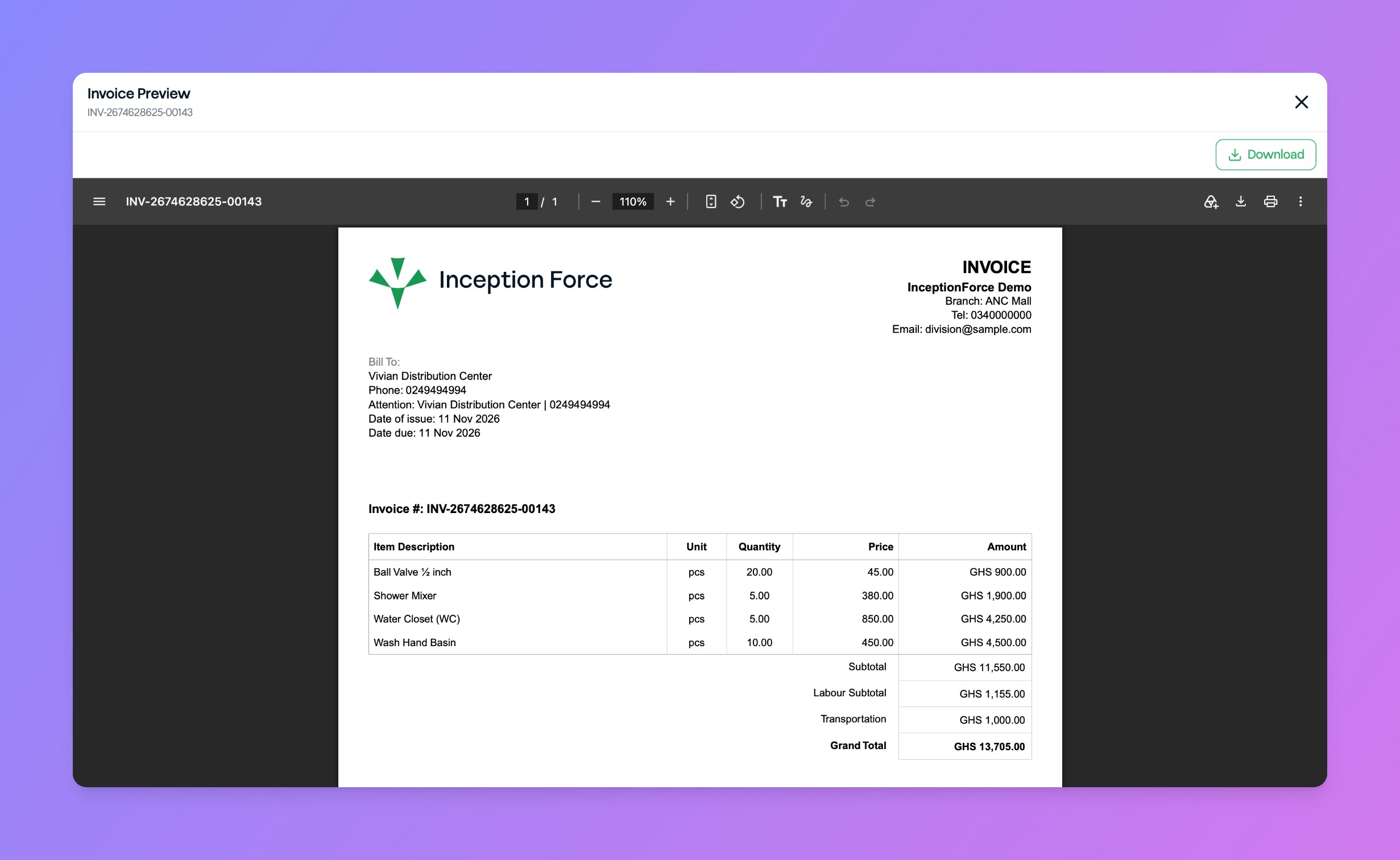
Watch Getting Started with InceptionForce for an introduction to business and warehouse setup, item and stock management, retail POS, sales orders, estimates, invoices, and payments.
Sources
Boateng, S. (2024). Assessing the Effects of Inventory Management Practices on Performance of Small and Medium-Size Enterprises in Accra. European Journal of Logistics, Purchasing and Supply Chain Management, 12(1), 33–44. Read the study abstract.
Ewuntomah, I. A. (2023). The Influence of Inventory Management Practice on Firms’ Competitiveness and Organizational Performance. MSc thesis, Kwame Nkrumah University of Science and Technology. View the repository record.
Ghana Enterprises Agency. (3 July 2026). Call for Proposals: Digital Tools Consultant—Integrated Digital Business Management Platform for SMEs. Read the announcement.
World Health Organization. Warehouse and Stock Management: First Expiry, First Out and First In, First Out principles. Read the stock-rotation guidance.